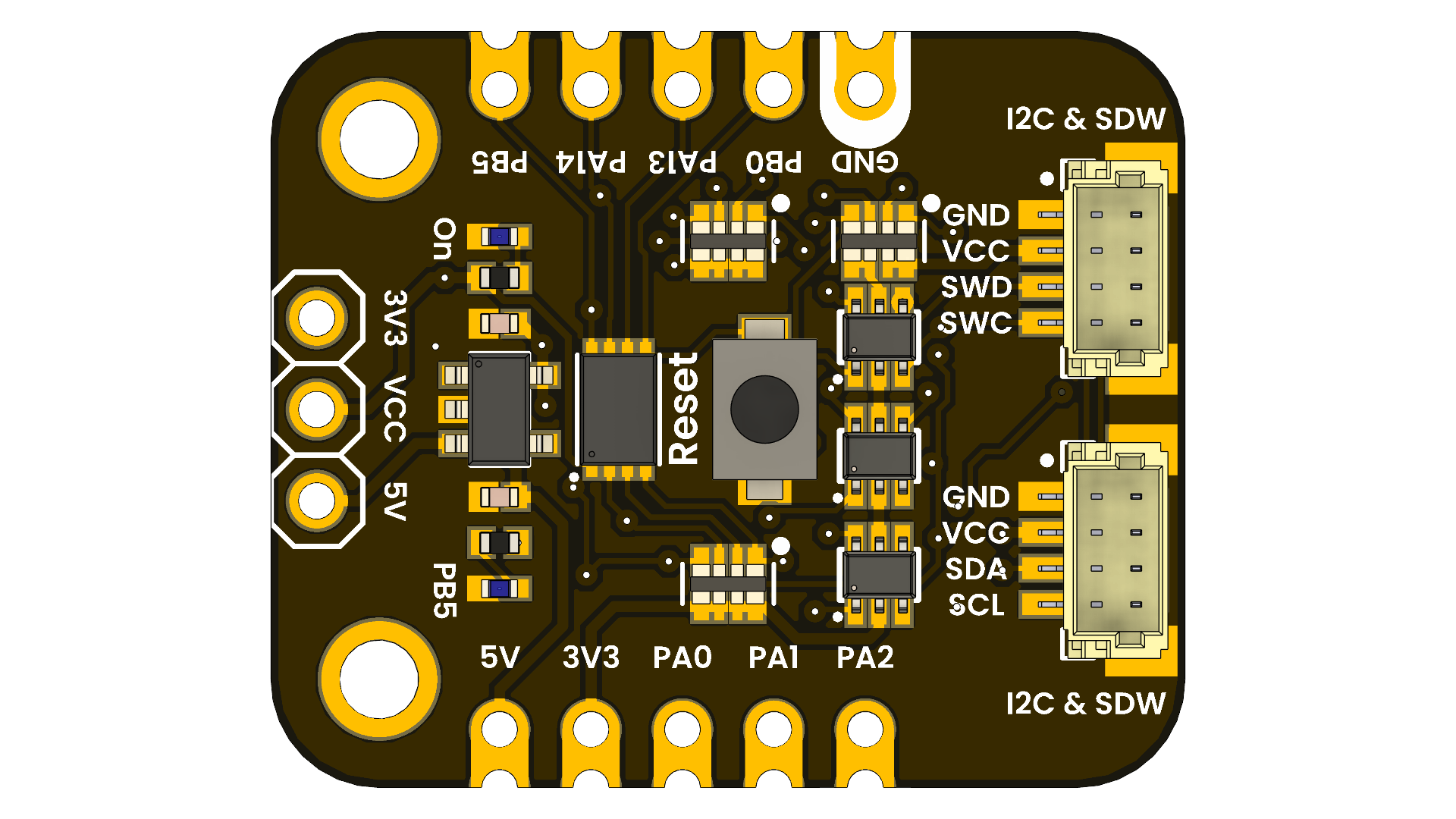
Rust HAL for PY32F0xx Microcontrollers#
Rust HAL is developed to provide a safe and efficient interface for programming PY32F0xx microcontrollers using the Rust programming language. It abstracts the low-level hardware details, allowing developers to write high-level code while still having access to the underlying hardware features.
Why Rust HAL?#
Safety: Rust’s ownership model and type system help prevent common programming errors, such as null pointer dereferencing and data races, making embedded development more reliable.
Performance: Rust is designed for performance, allowing developers to write low-level code that runs efficiently on resource-constrained microcontrollers.
Abstraction: The HAL provides a high-level interface to interact with the microcontroller’s peripherals, making it easier to develop applications without needing to manage hardware registers directly.
Community Support: The Rust embedded ecosystem is growing, with active community contributing to libraries, tools, and documentation.
Linux Support#
The Rust HAL for PY32F0xx microcontrollers is fully supported on Linux platforms. Developers can leverage the rich set of development tools available on Linux, including Cargo (Rust’s package manager and build system), GDB for debugging, and various flashing tools compatible with PY32F0xx microcontrollers.
Getting Started#
To get started with Rust HAL for PY32F0xx microcontrollers, follow these steps:
Set Up Rust Toolchain: Install Rust and the necessary toolchains for embedded development.
Clone the Repository: Clone the Rust HAL repository from GitHub.
git clone git@github.com:UNIT-Electronics-MX/py32f0xx-hal.git
- Build and Flash: Use Cargo to build your project and flash it to the
PY32F0xx microcontroller using a compatible programmer.
Explore Examples: Check out the example projects provided in the repository to understand how to use various peripherals and features of the microcontroller.